


History of Ferroelectric Doped HfO2 and ZrO2
In 2006, researchers such as Tim Boescke, Johannes Heitmann, and Uwe Schroeder at Qimonda (formerly Infineon Technologies), a manufacturer of dynamic random-access memory (DRAM), were screening doped HfO2 and ZrO2 dielectrics for DRAM capacitor applications. At that time, in the phase diagrams of HfO2 and ZrO2 at room temperature and atmospheric pressure, only centrosymmetric nonpolar phases were reported, such as the t-phase or the monoclinic phase (m-phase, space group: P21/c). Böscke found a voltage-dependent capacitance enhancement for a particular concentration when measuring the capacitance as a function of voltage for HfO2-based capacitors with different Si concentrations, which could not be explained by normal paraelectric behavior. Through a detailed electrical and structural characterization of the capacitor, the enhancement was found to be due to ferroelectric switching. A previously unreported non-centrosymmetric orthorhombic Pca21 phase was suggested to cause this behavior. Ulrich Böttger and Dennis Bräuhaus at RWTH confirmed the ferroelectric properties by subcycle and saturation polarization, field cycling endurance, fatigue, imprint, and piezoresponse experiments.
For the first three years, the focus was on integrating ferroelectric HfO2 into non-volatile memory devices, such as a ferroelectric field-effect transistor (FeFET) or a one-transistor/one-capacitor ferroelectric random access memory (FeRAM), because the initial results were obtained at a memory device manufacturer. Consequently, Tim Boescke, Uwe Schroeder, and Stefan Jakschik initiated the fabrication of the first ferroelectric field-effect transistor on 300 mm wafers in 2007, employing Qimonda’s smallest technology node, which is considerably smaller than any previously documented FeFET at that time. Even on the initial hardware, transistors fabricated with this material exhibited a permanent and switchable shift in threshold voltage. This allowed for the first time the realization of FeFETs with sub-10-nm gate insulators in a semiconductor production line. During this time, Tim Boescke started writing his PhD thesis, and Johannes Mueller started as a new PhD student on the topic at Fraunhofer CNT. Unfortunately, Qimonda’s bankruptcy delayed further research; however, NaMLab and Fraunhofer IPMS-CNT continued the work, and GlobalFoundries in Dresden, Germany began fabricating FeFET devices at an even smaller 28 nm technology node.
In 2011, five years after the initial experiments, the first publication reporting these exciting findings appeared, followed by several others. The observation of similar ferroelectric performance in HfxZr1-xO accelerated progress in the field, as this material offers a wide range of properties from mostly dielectric (x ≈ 1) to ferroelectric (x ≈ 0.5) to antiferroelectric (x ≈ 0). The research community had to be convinced that a simple oxide with a binary or ternary fluoride structure could have ferroelectric properties. Many groups joined the research effort to identify the proposed Pca21 oIII phase by diffraction in transmission electron microscopy, optimize the ferroelectric properties, and understand ferroelectricity’s origin in HfO2. Over the past decade, the applications of ferroelectric materials have expanded from ferroelectric capacitors, transistors, and tunneling interconnects for non-volatile memory applications to negative capacitors, logic-in-memory, neuromorphic computing, supercapacitors, and applications based on pyroelectrics or piezoelectrics. A rapidly growing number of publications is evidence of the strong research activity in this area.
Ongoing research
During the last two years, the main focus of developing ferroelectric HfO2-based materials is the detailed understanding of the ferroelectric properties in thin doped HfO2 layers. A variety of dopant materials were studied in addition to a mixed Hf1-xZrxO2. Deposition techniques included atomic layer deposition and physical vapor deposition. The ferroelectric orthorhombic Pca21 phase of HfO2 is formed when the material is crystallized with a certain dopant or oxygen concentration at the phase boundary between the monoclinic and the tetragonal/cubic phase and is enhanced through mechanical confinement. Scanning transmission electron microscopy and electron diffraction methods confirmed the structure. Continuous research aims to understand the root cause of this previously unknown phase. Here, dopant and oxygen content, which are directly related to stress and strain in the layer, play an essential role in phase stabilization. A linear relation between strain and the coercive field of the phase transition field was found (Figure 1).
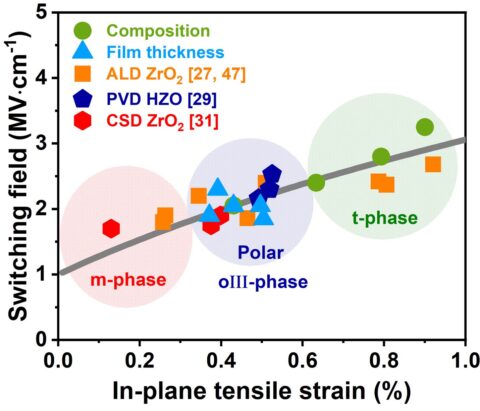
These parameters impact thermal stability and film reliability. Based on these results, significant improvements in the film performance could be achieved. Ab initio simulations by partners at the Munich UAS confirmed the influence of the factors mentioned above on the phase stability of ferroelectric HfO2 and proposed a similar relationship of barrier height for ferroelectric switching as a function of strain.
Depending on the dopant material, the polarization hysteresis showed a maximum remanent polarization value between 15-40 μC/cm². The highest values were obtained for lanthanum-doped HfO2 with TiN electrodes. Piezo-response force microscopy (Oak Ridge Nat. Laboratory/Univ. Nebraska), in conjunction with transmission electron microscopy measurements, revealed domains within single grains with a diameter of ~20-30 nm for 10 nm thick films. For ZrO2, a field-induced transition from non-polar to polar grains is found, as expected for a tetragonal to orthorhombic phase transition (Figure 2). The polycrystalline structure of the films caused a varying polarization orientation within the layer. The size distribution of the grains follows a Poisson distribution, resulting in a grain size-dependent coercive field and Curie temperature.
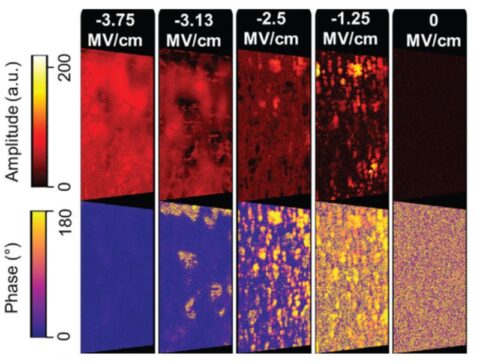
Future studies will focus on the structural basis of the ferroelectric properties, their impact on the ferroelectric switching behavior, and how device cycling performance can be improved.
Hafnium Oxide Based Piezo- And Pyroelectric Materials
The main focus of the work is on a detailed understanding of the pyroelectric properties (PE) in thin doped HfO2 layers. Pyroelectric properties were characterized for various doped HfO2 and Hf1-xZrxO2 films with different thicknesses.
A survey of the pyroelectric behavior was undertaken for a wide variety of dopants incorporated into HfO2 including Al, Gd, Sr, and La as well as the Hf0.5Zr0.5O2 composition. In addition to understanding the effect of different dopants, a detailed investigation of the pyroelectric dependence on the Si-concentration in Si-doped HfO2 thin films was carried out to evaluate the influence of the doping concentration on the pyroelectric performance. The Sharp-Garn method detects the current response upon a sinusoidal temperature stimulation was used to accurately determine the pyroelectric coefficients in ferroelectric films. Infrared sensing applications for example require a linear and reversible transduction of temperature into electrical charge (Fig. 1).
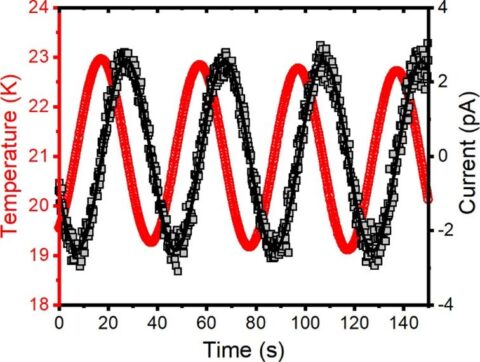
A new pyroelectric device was developed that incorporated antiferroelectric Hf-doped ZrO2 within a work function (WF) engineered capacitor, where electrode materials of TiN and RuOx were used to generate a constant internal electric field. This innovative development not only produces a zero applied field (passive) pyroelectric response from antiferroelectric thin films, but it also enables non-volatile on/off switching of the pyroelectric effect via bipolar voltage pulses. To distinguish and quantify the pyroelectric properties of ferroelectric Hf0.5Zr0.5O2 and WF-engineered ZrO2 thin film capacitors, both the poling and film thickness dependence was investigated. The pyroelectric coefficient in Hf0.5Zr0.5O2 was found to exhibit an electric field poling dependence due to the different polarized states of the ferroelectric films, whereas in the WF-engineered antiferroelectric ZrO2 capacitor the pyroelectric coefficient can be set either to -90 or 0 µC K-1 m-2 depending on the polarity of the poling field (Fig. 2).
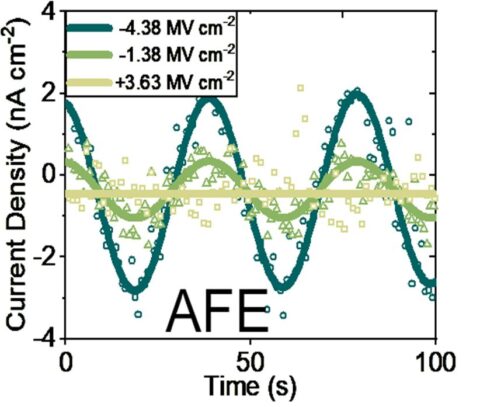
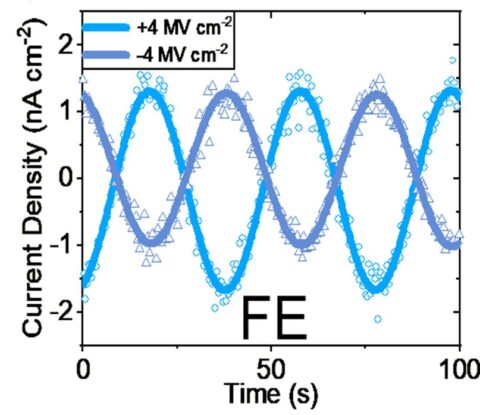
With strong pulsed poling fields, the pyroelectric coefficient saturates by maximizing the remanent polarization induced in the ferroelectric films. The role of film thickness was determined by varying Hf0.5Zr0.5O2 films from 10 – 30 nm in thickness. The highest pyroelectric coefficients and best figures of merit were obtained in 10 – 15 nm Hf0.5Zr0.5O2 thin films annealed at 450 °C (Fig. 3),
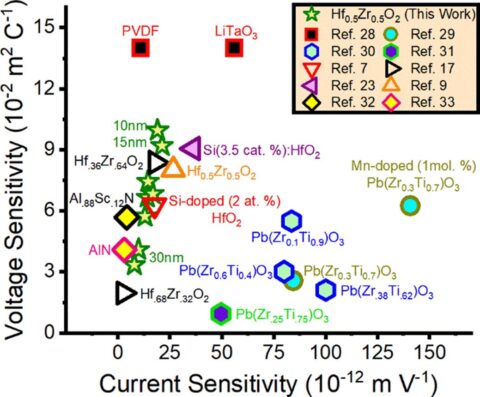
whereas the pyroelectric performance in thicker films and higher annealing temperatures was degraded due to the formation of the monoclinic phase and low-k interfacial layers. Through the Landau-Devonshire Gibbs energy equation for ferroelectrics, a relationship between the dielectric, ferroelectric, and pyroelectric properties was established in all types of HfO2-based thin films by the Curie constant.
OVERVIEW DIELECTRICS
Materials with high dielectric constant (high-k materials) play an increasingly important role in nanoelectronic devices. For example, in conventional semiconductors charge is stored in capacitors with a dielectric insulation layer. In order to maintain the storage capacity of capacitors, new dielectric materials with higher dielectric constants have to be introduced for devices with smaller area. Similar dielectric materials are needed for the next generation of high performance transistor devices as well as processors and logic products. A variety of research projects in the nano-scale regime are ongoing in order to gain an understanding of the influence of material properties with respect to leakage mechanisms, performance, speed and reliability.
As depicted in the schematic below, a set of five main material systems (Al2O3, HfO2, ZrO2, TiO2, and SiO2) is used for different dielectric applications. Accordingly, a detailed understanding of the structural and electrical properties gained on a device application can be used as a fundamental basic knowledge for future new devices. The impact of process properties on the device performance can be correlated. Especially, the optimization of charges and traps, dielectric constants, material properties like density, dielectric, piezoelectric, ferroelectric, and optical properties are important for the various device applications.
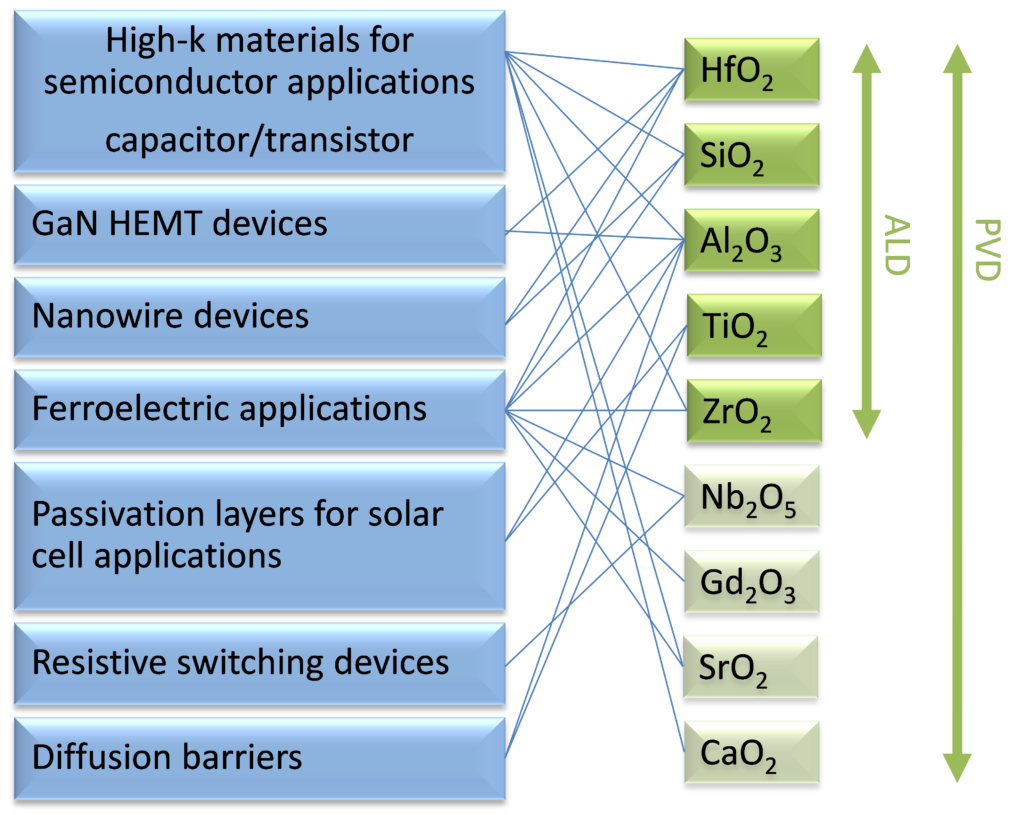
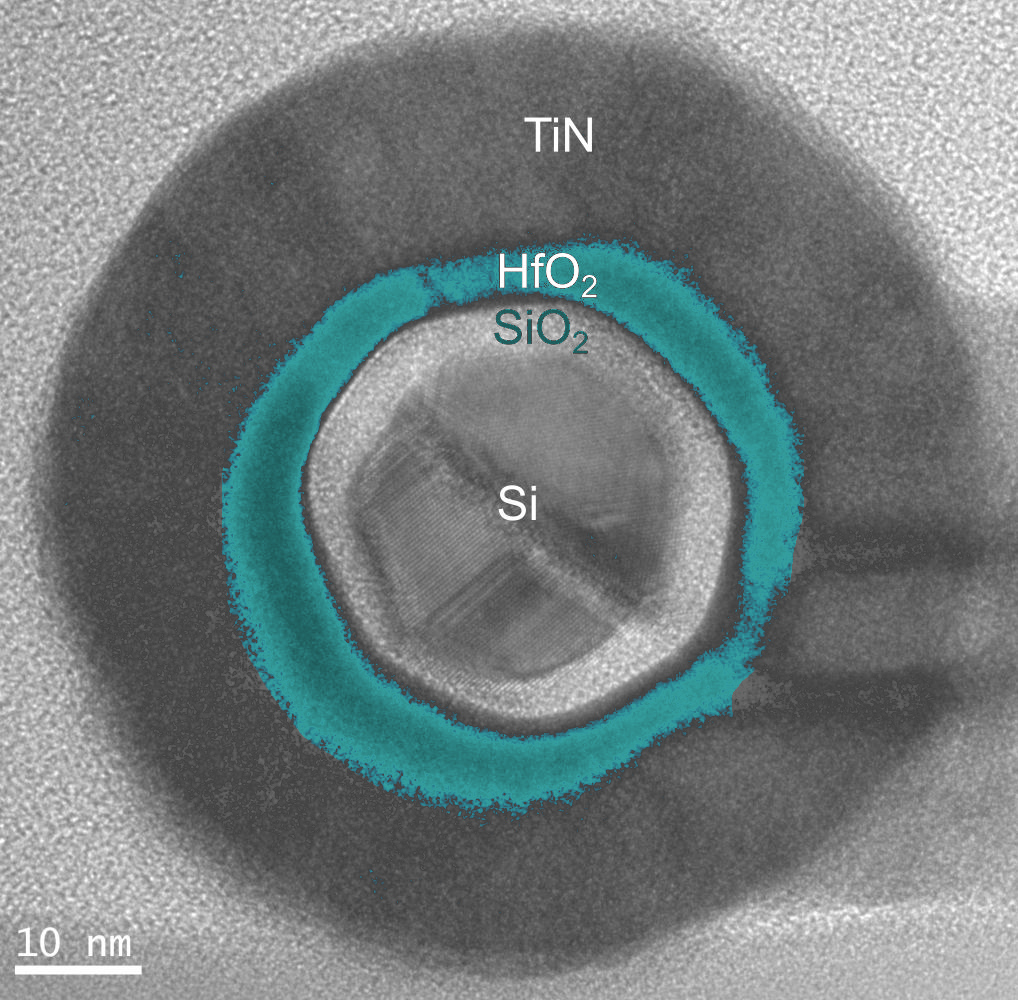
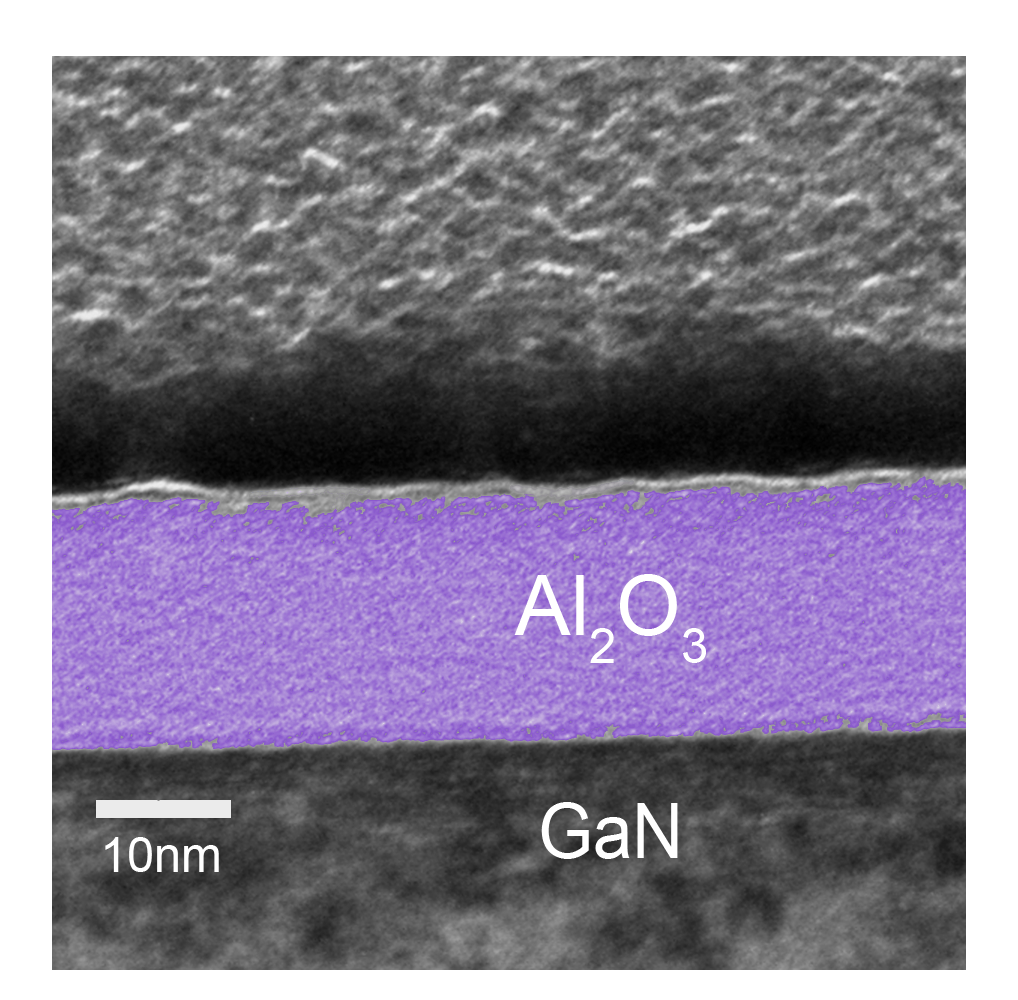
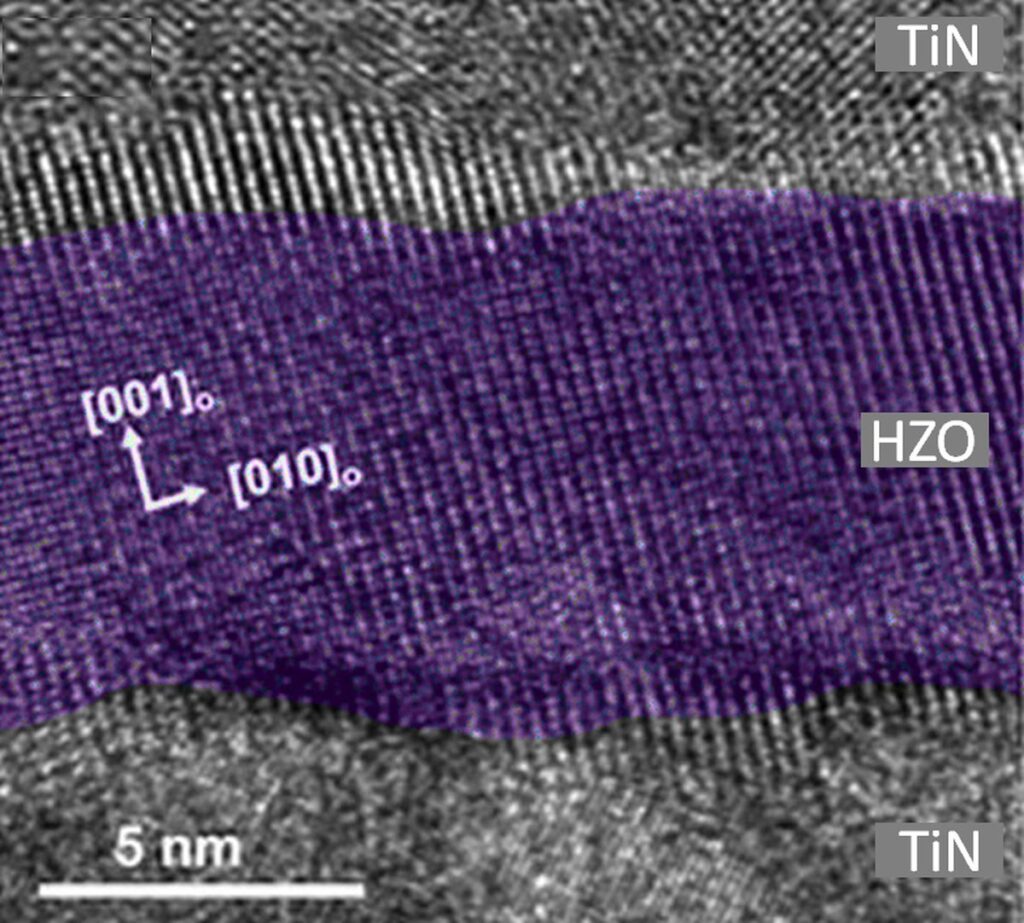
NaMLab also screens and characterizes other candidate materials for novel device applications, such as Nb2O5, La2O3, SrO2, Sc2O3, and CaTiO3. Additional novel dielectrics will follow. Materials are deposited by Atomic Layer Deposition (ALD), Physical Vapor Deposition (PVD), Chemical Vapor Deposition (CVD), and Molecular Beam Deposition (MBD), as shown in the drawing above. Research at NaMLab covers a wide range of applications, from dielectrics for nanowire transistors (Fig. 1), GaN HEMT devices (Fig. 2), to ferroelectric Hf0.5Zr0.5O2 based capacitors (Fig. 3).
Contact

Dr. Uwe Schroeder
Deputy Scientific Director/Senior Scientist
Phone: +49.351.21.24.990-21
E-Mail: info@namlab.com
Google: https://scholar.google.de/citations?user=XLoGFmIAAAAJ&hl=de&oi=ao
Scopus: https://www.scopus.com/authid/detail.uri?authorId=7005741352&origin=AuthorEval
Researchgate: https://www.researchgate.net/profile/Uwe-Schroeder-6
Core Competences
Piezoelectric-, Pyroelectric Properties of Doped HfO2 and ZrO2 films
Yearly Events
Namlab Novel High k Application Workshop
D3PO
Dopant and Defect Physics for Device Optimization for Hafnium Oxide based Devices (in cooperation with UAS Munich, CEA LETI, and CEA Saclay, start 2023)
SIDFEM
Strain and Interface Design for the Optimization of Ferroelectricity in the Hf1-xZrxO2 Material System (in cooperation with UAS Munich, start fall 2025)
Closed Projects
Zeppelin
Ferroelectric zirconium oxide for piezo- and pyroelectric devices (in cooperation with RWTH Aachen and UAS Munich, finished)
WUMM
Wurtzite Solid Solutions as a New Material Class for Ferroelectric Microelectronics (in cooperation with Univ. Kiel, finished)