


Since its formation, the Material Driven Device Integration group has focused on the development, optimization, and integration of novel electronic devices based on functional materials such as ferroelectric Hf1-xZrxO2. The research scope centers around the interplay between material properties, device architecture, and electrical behavior, with the aim of translating material functionalities into optimized device performance. Current research activities include ferroelectric capacitors (FeCaps), ferroelectric field-effect transistors (FeFET) and ferroelectric tunnel junctions (FTJs), with a particular emphasis on their application in non-volatile memory technologies and hardware acceleration. Our approach combines device engineering and electrical characterization to understand the underlying physical mechanisms and identify pathways for improving device functionality and performance.
A key focus is the investigation of device reliability and the development of physical models to describe and predict device behavior under different operating conditions. By combining experimental characterization, reliability assessment, and model development, the aim is to establish a comprehensive understanding of device operation and provide a foundation for systematic device optimization. Beyond non-volatile memory, the material-driven approach offers opportunities to develop and integrate novel device concepts for a broad range of applications, including optical technologies and energy conversion. Our goal is to bridge the gap between functional material properties and practical device applications through a combination of material understanding, device engineering, and modeling.
Contact

Dr.-Ing. Ruben Alcala
E-Mail: info[at]namlab.com





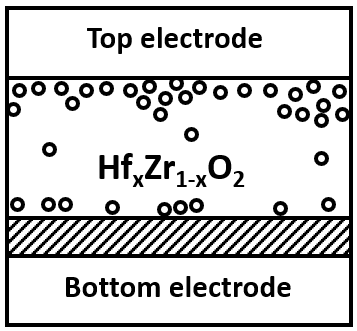
Material and Device Development for Non-Volatile Memories: Ferroelectric capacitors (FeCap) and ferroelectric tunneling junctions (FTJ) both are considered as extremely energy-efficient two-terminal memory devices. The main focus of the work is the engineering and optimization of the electrode and material stacks that form the devices. We fabricate these devices in our clean room and integrate them together with conventional CMOS process lines in order to explore their suitability and performance in memory and non-volatile computing applications at a system level.
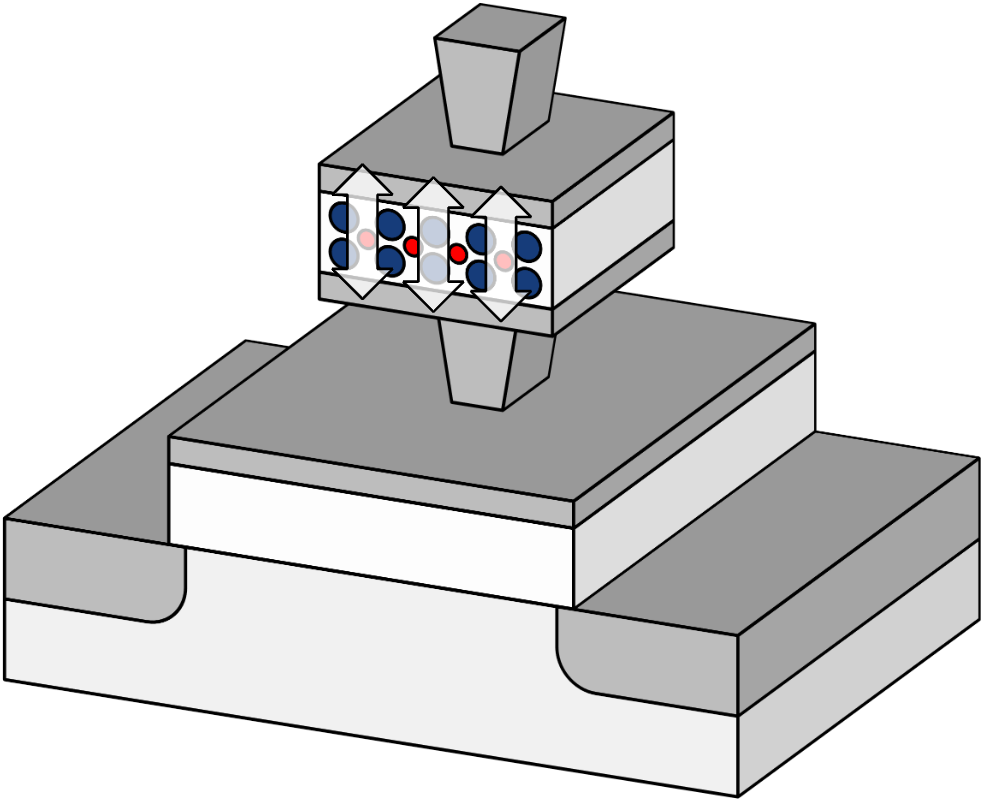
Non-Volatile Device Development for Hardware Acceleration: A particular focus is the development of FeFET-2 devices for multi-level data storage and in-memory computing. Through electrical characterization, reliability analysis, and device modeling, we investigate the trade-offs between operating voltage, retention, and switching endurance to enable reliable, low-power memory arrays for machine learning and edge AI applications.