NaMLab History
NaMLab was created in 2006 as a public-private partnership between Qimonda AG and TU Dresden. The aim was to conduct research and predevelopment on materials for future memory devices, such as DRAM, RRAM, and ferroelectric memories, at a stage when many different options still needed to be narrowed down before further exploration in a 300 mm line could take place. This activity was severely impacted in the initial phase by Qimonda’s insolvency in 2009. NaMLab was rescued by the Free State of Saxony and became a state-funded research organization, which put TU Dresden in a position to acquire the remaining shares from Qimonda’s insolvency administrator. Today, NaMLab is a wholly owned subsidiary and an associated institute of TU Dresden. Following the loss of the industrial shareholder, NaMLab underwent a reorientation phase focusing on three main topics and several sub-topics, which soon proved to be highly successful: ferroelectric materials and devices, GaN materials and devices, and reconfigurable electron devices. Dielectrics for solar cells have also been a successful focus for a while. Today, NaMLab is considered a pioneer and leading research institute in ferroelectric materials and devices, and reconfigurable devices. It has established a strong network both with respect to industrial partners and academic institutions.
Prof. Dr.-Ing. Thomas Mikolajick
Thomas Mikolajick received the Dipl.-Ing. and the Dr.-Ing. in electrical engineering in 1990 and 1996 from the University Erlangen-Nuremberg. From 1996 till 2006 he was in semiconductor industry (Siemens Semiconductor, Infineon, Qimonda) developing CMOS processes and memory devices with a strong focus on nonvolatile memories. In 2006 he became professor for material science of electron devices at TU Bergakademie Freiberg. Since 2009 he is a professor for nanoelectronics at TU Dresden and the scientific director of NaMLab gGmbH. He is co-author of more than 500 publications (h-index of 107 according to google scholar) and co-inventor in more than 50 patent families. He is a highly cited researcher in the 2022, 2023, 2024 and 2025 editions of the clarivate highly cited researchers list. In 2018 he served as the general chair of the ESSDERC/ESSCIRC conference in Dresden and in 2020/21/22 as the local chair and in 2023 as the general chair of the International Memory Workshop (IMW). Since 2019 he is also the speaker of the BMFTR ForLab consortium and since 2024 speaker of the DFG transregio 404 “active 3D”. Since 2023 he is an IEEE Fellow for Contributions to Nonvolatile Memory and a recipient of the 2026 APS McGroddy prize for new materials for “For seminal contributions to the implementation of ultra-thin, hafnium-based ferroelectrics in microelectronic devices”.
Contact
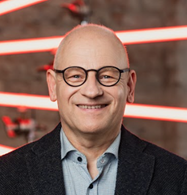
Prof. Dr.-Ing. Thomas Mikolajick
Scientific Director